











The Sahel is bracing for a potentially devastating wave of cross-border insurgency and asymmetric violence in the third quarter (Q3) of 2025. Our analysis, drawn from intelligence briefings, satellite data, local sources, humanitarian fieldwork, and international conflict monitoring systems, reveals the convergence of several high-risk factors: militant realignment, ungoverned territories, state fragility, and transnational weapons flows.

This report identifies and analyzes the driving forces behind the anticipated escalation of violence. Core areas of concern include the Mali–Burkina Faso–Niger tri-border zone, where Jama’a Nusrat al-Islam wal-Muslimin (JNIM) and Islamic State in the Greater Sahara (ISGS) continue to expand operational reach; Northern Nigeria, where Boko Haram offshoots remain active; and the increasingly lawless corridors between southern Libya and northern Chad.
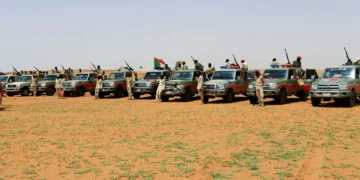
We expect intensified militant incursions into civilian and security outposts, coordinated raids across weakly manned borders, and a spike in targeted ambushes. The resurgence of foreign-backed jihadist networks and their use of sophisticated communications and logistics channels adds to the complexity.

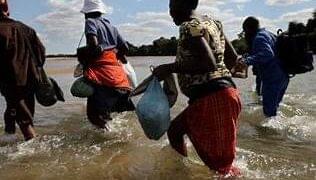
Furthermore, the human cost is projected to worsen. Refugee outflows into Chad and Niger could spike by 15–20% by September 2025. Regional militaries are stretched thin, and regional cooperation—though improving—remains reactive.
The report closes with a call to action, emphasizing the urgent need for a coordinated continental response to this looming crisis.
“The Sahel is no longer just a hotspot—it is a fuse. If African states do not jointly neutralize the cross-border insurgency threat in Q3 2025, we risk a regional wildfire that will be far harder to contain by Q4. The time to act decisively is now.” — Emmanuel Kotin, Executive Director, Africa Center for Counter Terrorism
1. GEOPOLITICAL BACKGROUND
The Sahel region has long been plagued by socio-political instability, climate stress, and security vacuums. Since the 2011 NATO-backed toppling of Gaddafi in Libya, the region has seen an explosion in the proliferation of small arms, extremist ideology, and transnational militant groups.
The Islamic State in the Greater Sahara (ISGS) and Jama’a Nusrat al-Islam wal-Muslimin (JNIM) have evolved into complex insurgent entities, using propaganda, kidnapping for ransom, and community infiltration to expand control. Boko Haram factions remain a destabilizing force in northeastern Nigeria and beyond, frequently merging tactics with criminal syndicates.
International intervention—through France’s former Operation Barkhane, the G5 Sahel Joint Force, MINUSMA, and bilateral partnerships—has achieved mixed results. Many interventions are winding down or undergoing strategic shifts, leaving vacuumed spaces exploited by non-state actors.
2. EMERGING PATTERNS OF MILITANT ACTIVITY
The first half of 2025 has revealed several evolving tactics among insurgent groups:
- Increased Cross-Border Collaboration: ISGS cells in Niger are reportedly coordinating with Libyan-based smuggling networks.
- Shift to Guerrilla-Style Ambushes: Instead of holding territory, groups conduct hit-and-run raids on patrols and supply convoys.
- Use of Drones and Commercial Communication Apps: Encrypted apps and drones have been observed in logistics coordination.
- Child Soldier Recruitment & Gendered Violence: Recent UN briefings highlight the use of boys in raids and sexual violence against displaced women.
- Ethnic Mobilization: Fulani herder communities are increasingly targeted for recruitment due to socio-economic grievances.
3. BORDER VULNERABILITY MAPPING
Porous borders remain one of the most dangerous vulnerabilities in the Sahel. Satellite surveillance and on-ground recon have highlighted several unmonitored corridors. These include:
- Mali–Burkina Faso–Niger Triangle: Known as the “three borders” zone, a nexus for ISGS and JNIM movements.
- Libya–Chad–Niger Corridor: Used for smuggling fighters and weapons, especially near Sabha and Tumu.
- Diffa Region (Niger) to Borno (Nigeria): Boko Haram movements continue across Lake Chad islands.
- Sikasso to Bobo-Dioulasso: A route used for resource extraction and informal taxation.
4. COUNTRY-SPECIFIC ALERTS
- Mali: Gao and Ménaka likely targets of increased raids by ISGS after recent military withdrawals.
- Burkina Faso: Intelligence suggests JNIM preparing for offensives around Djibo and the Centre-Nord region.
- Niger: Tillabéri province facing coordinated raids; Niamey under growing security pressure.
- Nigeria: New splinter faction in Borno targeting humanitarian convoys; armed bandits intensifying operations in Sokoto/Zamfara.
- Mauritania: Border monitoring hampered by desert terrain and tribal tensions.
- Chad: Rebellion in the south, spillover from Sudan’s Darfur causing internal destabilization.
- Sudan: Conflict in Darfur threatens to engulf border towns and complicate humanitarian access.
5. PREDICTIVE FORECAST MODELS
By using trend extrapolation from Q1–Q2 2025 ACLED data and satellite anomaly detection systems, ACCT projects the following through Q3:
- 30% rise in cross-border incidents in the Mali–Burkina Faso–Niger triangle
- 15% increase in fatalities tied to asymmetric tactics (IEDs, ambushes)
- New routes emerging from Sabha (Libya) into Nigerien airstrips for clandestine logistics
6. SECURITY FORCE READINESS & GAPS
Regional defense capacity is uneven. While Nigeria maintains drone capability and Niger benefits from U.S. logistical support, Burkina Faso and Mali suffer from overstretched forces. MINUSMA’s recent drawdown creates a dangerous intelligence gap.
Joint task forces often suffer from poor coordination, language barriers, and incompatible equipment. Meanwhile, local militias lack oversight and may provoke retaliatory cycles.
7. CIVILIAN IMPACT & DISPLACEMENT PROJECTIONS
- Projected 3.2 million displaced across the Sahel by late Q3
- Major camps: Diffa (Niger), Goudoubo (Burkina Faso), Baga Sola (Chad)
- Humanitarian access: At risk due to road ambushes and targeting of NGO convoys
8. EXTERNAL INFLUENCE & WEAPON SUPPLY CHAINS
ACCT tracking identifies Gulf-based funders for ideological operations and growing interest from Russian-affiliated private security firms operating through Libya. The weapon pipeline continues to trace through Libya’s southern belt into Agadez (Niger), and onward.
Arms include:
- Modified AK variants
- IED components
- Surface-to-air missile parts
9. STRATEGIC POLICY RECOMMENDATIONS
- Establish Rapid Response Cells within ECOWAS for immediate hotspot action.
- Increase joint UAV operations along Mali–Burkina–Niger front.
- Standardize cross-border radio communications between national militaries.
- Bolster refugee response infrastructure in Niger and Chad.
- Implement regional arms monitoring units with international tech support.
10. EXPERT COMMENTARY BOX
“The Sahel is no longer just a hotspot—it is a fuse. If African states do not jointly neutralize the cross-border insurgency threat in Q3 2025, we risk a regional wildfire that will be far harder to contain by Q4. The time to act decisively is now.”
— Emmanuel Kotin, Executive Director, ACCT
The Review
The Legend of Zelda
A wonderful serenity has taken possession of my entire soul, like these sweet mornings of spring which I enjoy with my whole heart. I am alone, and feel the charm of existence in this spot, which was created for the bliss of souls like mine.
PROS
- Good low light camera
- Water resistant
- Double the internal capacity
CONS
- Lacks clear upgrades
- Same design used for last three phones
- Battery life unimpressive