






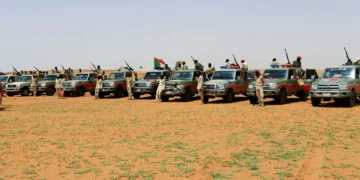








From crude ambushes and machete raids in the early 2000s to sophisticated cyber-espionage and drone-enabled surveillance in 2025, Africa has witnessed a dramatic transformation in the tactics employed by terrorist organizations. These changes are not just reactive—they represent strategic adaptations grounded in both local conditions and global jihadist frameworks. Militant groups have effectively exploited technological advancements, local insurgent grievances, regional instability, and global networks to thrive and expand.

Key Findings:
- Strategic Targeting: Militant groups increasingly prioritize infrastructure, energy assets, and symbolic state institutions over traditional military outposts.
- Digital Propaganda Evolution: There has been a marked transition from analog to digital communication, with groups deploying encrypted messaging apps, deepfake propaganda videos, and livestreamed attacks.
- Tactical Weaponization: Use of IEDs, VBIEDs, and suicide bombings peaked in the 2010s, but the 2020s introduced drone surveillance, cyber attacks, and social engineering tactics.
- Tactical Mimicry: Terrorist groups adopt each other’s innovations across regions rapidly—what starts in Libya is often mirrored in Nigeria or Somalia within months.
“Terrorism in Africa has mutated into a tactical arms race—from machetes to drones, from desert ambushes to cyber cells. This infographic lays bare how the battlefield keeps evolving.”
— Emmanuel Kotin, Executive Director, Africa Centre for Counter Terrorism (ACCT)

Pre-2000s Militant Landscape:
- Rebellions were largely territorial and ethnic in focus (e.g., Tuareg insurgencies, Angola’s separatist wars).
- Attacks involved crude weapons: machetes, home-built bombs, and limited firearms.
Post-9/11 Shift:
- Global counterterrorism efforts catalyzed training, networking, and funding pipelines for African jihadist groups.
- Fighters returning from Iraq, Syria, and Afghanistan brought advanced tactics, especially to North and East Africa.
Post-Gaddafi Fallout:
- The 2011 Libyan civil war unleashed a massive outflow of weapons, personnel, and radical ideology.
- Training camps flourished in southern Libya and northern Mali, serving as launchpads for Sahel and West African operations.
III. Regional Case Studies
West Africa
- Boko Haram/ISWAP: Transitioned from guerrilla warfare to territorial governance, including tax collection and judicial enforcement.
- Ansarul Islam (Burkina Faso): Exploits Fulani marginalization and utilizes bush ambushes and cross-border retreats.
East Africa
- Al-Shabaab: Pioneered use of female suicide bombers, vehicle-borne IEDs, and social intelligence to infiltrate urban targets in Kenya.
- Signature attacks include Garissa University (2015) and DusitD2 complex (2019).
North Africa
- ISIS in Libya: Noted for sniper warfare, drone mapping, and coastal training camps.
- AQIM sleeper cells remain active in Tunisia’s mountains, launching surprise raids and propaganda releases.
Central Africa
- ADF (Allied Democratic Forces, DRC): Combines classic ambushes with psychological operations and prison breaks.
- LRA: Pioneered child soldier recruitment and radio deception, now fragmented but influential in tactics.
Southern Africa
- ISIS-Mozambique: Executes sophisticated amphibious ambushes, targeting LNG operations in Cabo Delgado.
- Expanding recruitment networks reaching South Africa, Zambia, and Tanzania.
IV. Tactical Shifts Over Time
| Tactic | 2000s | 2010s | 2020s |
|---|---|---|---|
| Ambushes | Roadside, improvised | Coordinated attacks | Drone-assisted, GPS-guided operations |
| IEDs & Suicide Bombings | Rare and rudimentary | Frequent in urban zones | UAV-delivered payloads (targeted) |
| Propaganda | CDs, sermons, print flyers | YouTube, local radio, Facebook | Deepfakes, Telegram, short-form video loops |
| Recruitment | Madrassas and clerical networks | Mosque sermons and Facebook | TikTok, encrypted chats, influencer appeals |
| Primary Targets | Military patrols | Churches, markets, local gov’t | Power grids, schools, government archives |
V. Profiles of Innovation
- ISGS (Sahel): Perfected motorcycle assault platoons equipped with helmet cams for propaganda.
- Al-Shabaab: Used local intelligence agents to direct suicide missions with pinpoint accuracy.
- ISIS-Mozambique: First to integrate riverine ambushes and hostage live-streaming into insurgency operations.
VI. State & Regional Responses
- West Africa: Multi-National Joint Task Force (MNJTF), drone-supported patrols, ECOWAS training missions.
- East Africa: Kenya’s security fence with Somalia, biometric systems, and grassroots alert networks.
- North Africa: Algerian surveillance outposts; Tunisia’s smart borders and satellite monitoring.
Persistent Challenges:
- Delayed intelligence sharing among African nations
- Disparity in military tech access (especially ISR and drones)
- Lack of harmonized CT doctrine across RECs
VII. Future Projections (2030)
- AI-enabled surveillance by both state and non-state actors
- Encrypted radio mesh networks for field coordination
- Civilian tech repurposing (e.g., ride-share systems for covert logistics)
- Gamified recruitment using metaverse environments and interactive narratives
VII. Policy Recommendations
For African Governments & Regional Bodies (RECs):
- Develop tactical training interoperability across borders
- Establish AI-driven open-source intelligence monitoring units
- Launch counter-propaganda literacy programs in at-risk communities
For AU, ECOWAS, IGAD, UN, and Partners:
- Establish and fund regional intelligence fusion centers
- Draft uniform CT tech standards and cyber-terrorism laws
- Scale-up rapid-response CT teams for emerging digital threats